REXE wants to automate the work. Its founder is still doing the hard part.
Edward Jiwon Oh says execution is becoming abundant. His pitch leaves a stubborn question: how much of the machine is still him?
Edward Jiwon Oh says the scarce asset in software is no longer the ability to build it. It is knowing what to build.
Conveniently, that is the part he does.
The REXE founder describes a development process in which agents handle implementation while he supplies intent, direction, and judgment. He does not write the code. He wants to turn the infrastructure around that process into something other founders can use, eventually without him.
There is a business proposition here. There is also a rather important missing demonstration: another founder doing it.
Oh does not conceal that gap. Asked what remains to be proven before clients are buying a repeatable product rather than his personal ability to deliver, he says: “That remains to be seen.”
It is the best answer in the interview. Much of the conversation before it is about what Oh believes he has already proved.

The word “just” is carrying the company
Oh says most of the capability resides in the infrastructure. His contribution, as he describes it, is to direct the builders and provide the intent and judgment.
Just that.
But elsewhere in the conversation, intent and judgment are precisely the things he says machines cannot replace. Customer understanding is the scarce asset. Direction is the founder’s job. Taste determines whether the result deserves to exist. Remove those inputs and, by his own account, the system could efficiently build the wrong thing.
That does not make the infrastructure worthless. It makes the division of labor worth examining. If the founder still has to know the customer, choose the objective, recognize a useful result, and decide when to stop, the machine has automated a substantial amount of work without necessarily automating the hardest decisions.
“Self-directing,” in Oh’s description, means moving toward a human-defined objective within boundaries. It is an expansive phrase for a conditional capability. Someone still has to choose north.
Oh says an existing client could become an early user after its current product launches. Until that handoff happens, the founder remains both the demonstrator and a component of the demonstration.
Cheap is an argument. It is not an exemption.
Ask Oh whether an experiment deserves more investment and he objects to the premise. He says he builds several products in parallel, at costs low enough to make conventional project-by-project calculations feel misplaced.
“I think you’re trying to … pigeonhole us into a traditional tech company or even a traditional venture fund,” he says.
He has a point. If the cost of trying something falls sharply, a project that once required a budget meeting can become a reasonable experiment. Software for a small market can become worth producing without first inventing a story about how that market will become enormous.
Oh is considering an accelerator-like model: infrastructure in exchange for equity and potentially a share of the cash a business generates. Smaller profitable companies could be desirable outcomes, with bigger bets alongside them. The terms and rollout are undecided.
But “our costs are different” cannot answer every question about the business. Cheap construction does not establish cheap maintenance. Fast production does not establish customer demand. A portfolio of experiments can be inexpensive to start and expensive to keep alive.
The interesting economic question is who captures the savings. The builder? The customer, through lower prices? The model provider? A competitor who can now reproduce the same product?
In “Strategy Letter V,” Joel Spolsky described how cheaper complements can increase demand for another product. That offers a plausible reading of REXE: make engineering inexpensive enough and a founder’s specialized customer knowledge becomes more commercially useful.
The same essay cautions against confusing software with a zero purchase price with software that has no economic cost. Time and opportunity cost survive the price tag. Oh may have changed the arithmetic. The interview does not establish that he has escaped it.
He has seen this trap before
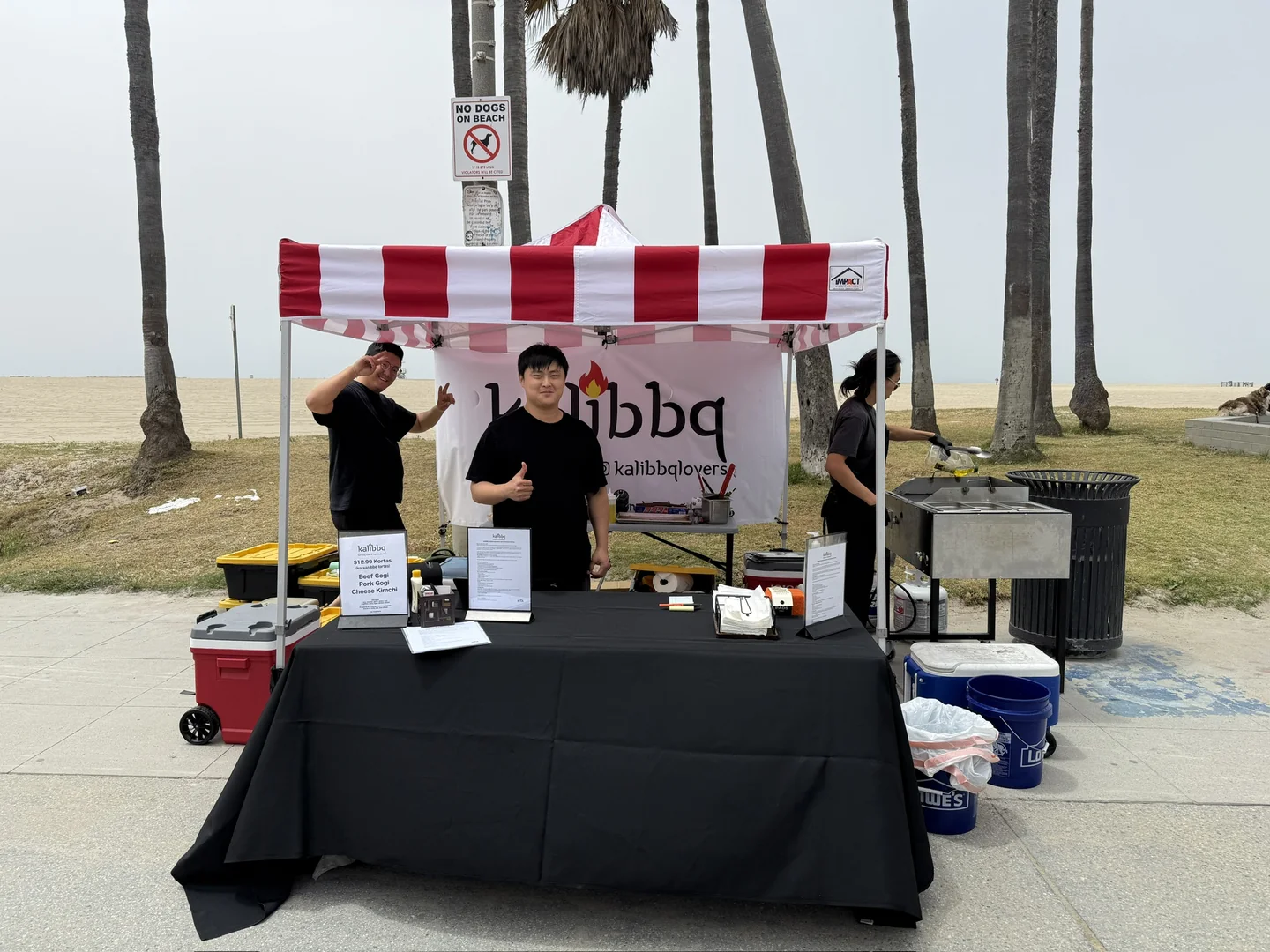
Oh’s account of legal videography is more persuasive than his broadest claims about the future of AI.
He describes a professional-looking service in which the person visible in the room was not necessarily the person controlling the purchase. Agencies and booking relationships mattered. In his experience, the buyer wanted the job completed reliably and without complaints. Better craft did not automatically buy him pricing power.
His conclusion was unsentimental: the work could look impressive while the supplier remained replaceable.
That lesson ought to worry an AI founder. A complicated production system can be impressive too. So can its output. Neither establishes that a customer has a compelling reason to keep buying from its owner.
Oh wants defensible products. He says commodity work is worthwhile when it teaches lessons or produces components that lead somewhere more valuable. He declines to discuss the methods behind that advantage.
Fair enough. A company need not publish its recipe. But secrecy also means the reader cannot assess the claimed advantage from the explanation alone. The results have to carry more of the argument.
His reported client revenue is evidence in favor of the current activity, if substantiated. It is not yet evidence that a founder-operated platform works without its inventor. A client can be paying for an excellent service while the provider is still trying to discover the product inside it.

The market does not owe an outsider a victory
Oh wants founders who know their markets and can execute. He has little patience for people who use elite schools or prestigious technology jobs as substitutes for those qualities.
Pressed on whether he would accept a credentialed founder who had demonstrated them, he says yes. The objection is to borrowed credibility, rather than to a particular university.
It is a reasonable distinction. It is also less radical than the rhetoric around it. Paul Graham’s 2013 essay “Do Things that Don’t Scale” urged founders to recruit early users manually and work unusually hard to satisfy them. Customer intimacy and persistence were startup virtues before agents could write an application.
The point is not that Oh must be wrong because parts of his philosophy have precedents. It is that familiarity with a neglected principle is different from owning a principle no competitor understands.
Non-consensus thinking has a similar problem as a credential. Being outside the club can free someone from its assumptions. It can also leave them outside the club with a bad idea.
Oh acknowledges that being early can resemble being wrong. Yet when asked what would change his mind about REXE, he returns to revenue and output as evidence that he is right. Those signals matter. They still have to answer the particular claim being tested.
The research declines to cooperate
At one point, Oh suggests that model cognitive ability has plateaued and may improve only incrementally from here. He asks for the claim to be checked.
The research reviewed does not give him that conclusion.
Stanford’s 2026 AI Index reports continued gains on measured capabilities, alongside benchmark saturation and evaluation reliability problems. METR’s January 2026 update reports continued growth in the length of tasks agents can complete in its evaluation setting, with substantial uncertainty and sensitivity to task selection. Neither provides a definitive measure of cognition. Neither establishes a general plateau.
A test running out of difficult questions is not the same thing as a model running out of potential.
This is an unnecessary fight for REXE to pick. Its business might work whether models improve rapidly or slowly. Organizations could be underusing present capabilities even as those capabilities expand. Better coordination, verification, and product judgment could have value in either world.
Oh is on firmer ground when he distrusts uncritical model agreement. Research presented at ICLR 2024 found that preference optimization can sometimes favor sycophancy over truthfulness. That is support for a failure mode, not for his broader characterization of agreeableness as an unavoidable property of every model.
His response is to emphasize governance and verification: boundaries before building, checks alongside implementation. It is a serious engineering concern. It is not proof that hallucination has been solved. An agent can write a test that confidently approves the same misunderstanding embedded in its code.
A machine agreeing with its own homework is still a machine agreeing with itself.
The useful version of the claim
Oh’s most convincing operating rule is also one of his least grandiose.
Build a minimal slice a customer can actually use. See whether they use it. If they do not, find another angle or reuse the work elsewhere.
He wants the experience to be enjoyable enough that people return. “Fun can’t just be aimless,” he says. It has to sustain the work. His interest in John Dewey’s Art as Experience helps explain the creative standard: technical completion is not the same as an experience worth having.
That leaves REXE with a practical test. Another founder needs to use the infrastructure, obtain dependable results, and keep finding enough value to justify the relationship. The economics must include what happens after the exciting part—the build.
That would be more informative than another claim about the volume of code generated. It would also answer the question Oh’s pitch keeps circling: has he built something that transfers his capability, or a powerful system that still needs his capability to function?
“That remains to be seen” is not a bad place for an early company to be.
It is simply an earlier place than “we’ve proved it.”
Editorial note: This article was prepared from an AI-conducted interview with Edward Jiwon Oh, with AI-assisted research and editing, for his own website. It is not independent reporting commissioned by an outside publication. Direct quotations come from the interview; interpretation belongs to the editorial narrative. Client revenue is founder-reported. Financial records, private repositories, client testimony, and product reliability have not been independently audited. Numerical output and cost claims, confidential methods, and unreleased client details are excluded. Outside authors have not evaluated REXE; their published work supplies context, not endorsement.
References
Published on Edward Jiwon Oh’s website. Not automatically an official position of REXE.