KaliBBQ
A Korean-Mexican torta became a hands-on lesson in sourcing, costing, logistics, and the limits of a business with little room for setbacks.
A sandwich rooted in Los Angeles
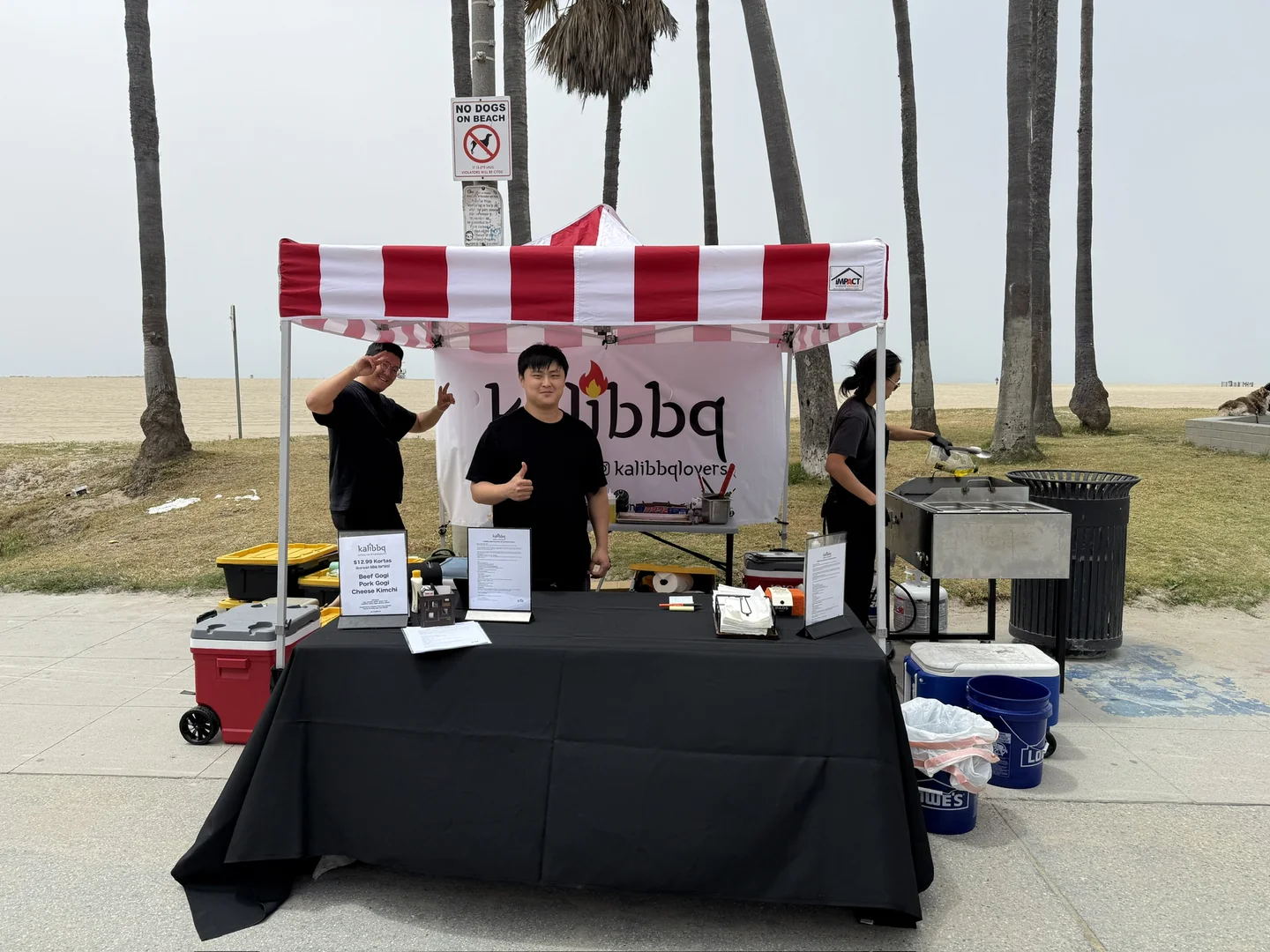
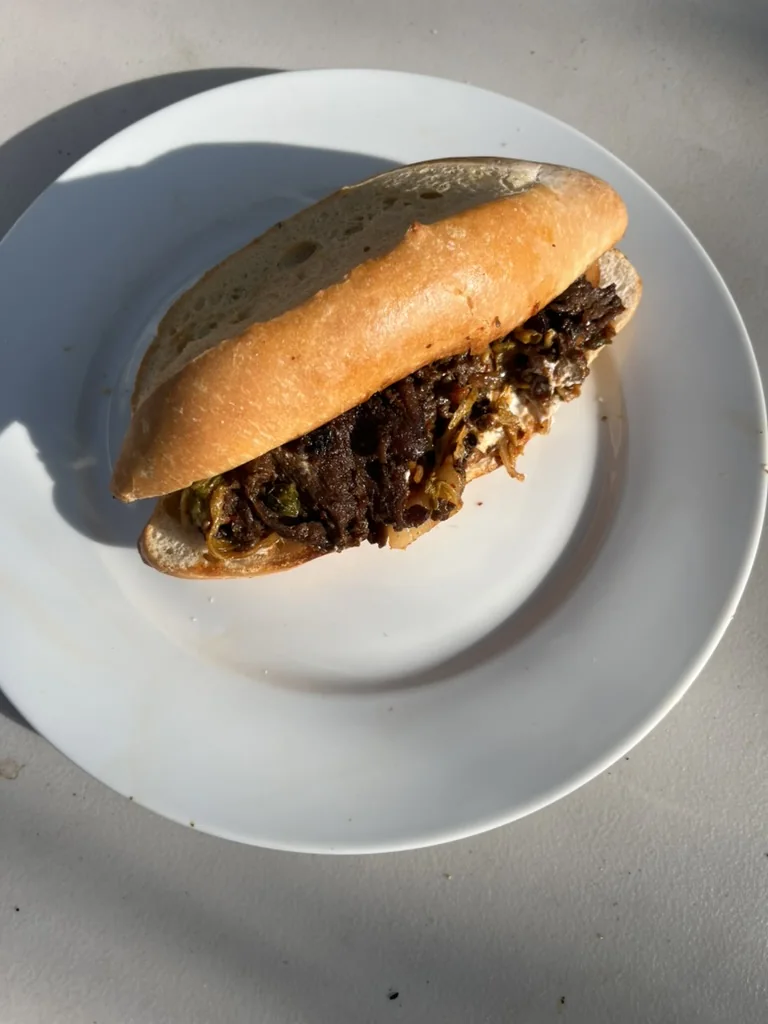
The sandwich brought together ingredients Oh knew from growing up in Los Angeles: bulgogi, kimchi, Mexican cream, and a torta roll. Korean-Mexican fusion tacos were already familiar to him. He wanted to try the combination in a sandwich. KaliBBQ was the business; Korean BBQ Tortas was the product.
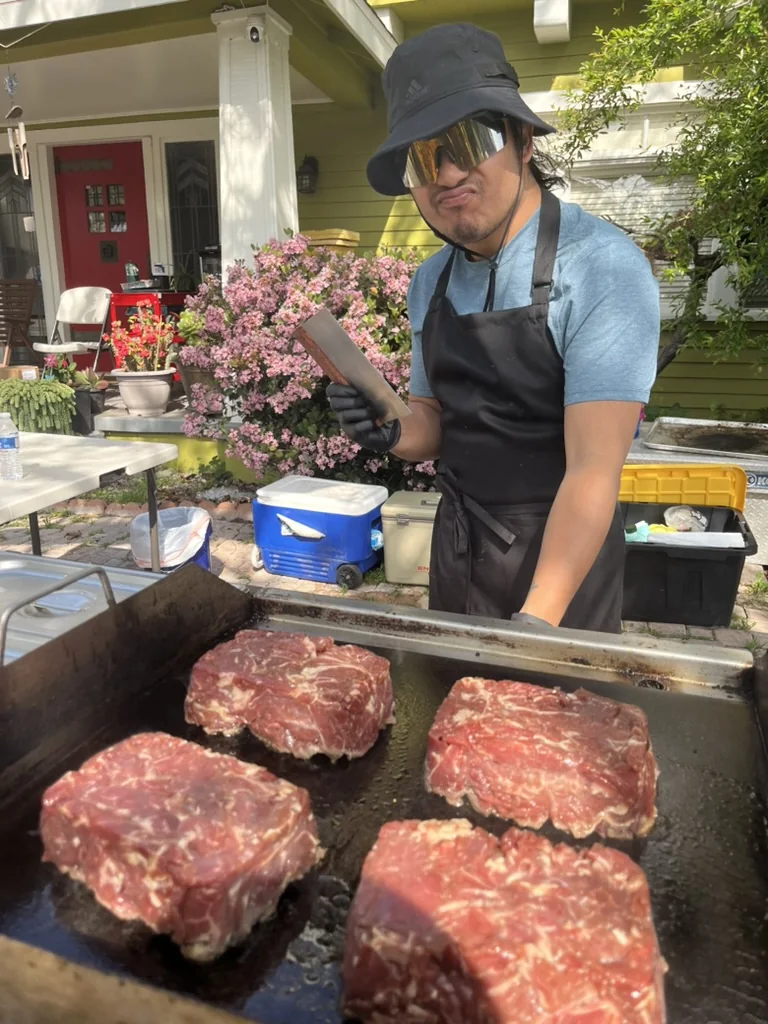
The rolls came from a bakery in the Inglewood area. Meat and kimchi came from Koreatown Galleria, and the cream from a Mexican market. On the plancha, the meat cooked alongside chopped kimchi; the torta was toasted before assembly. Oh remembers the result as crisp, juicy, and a little tangy.
Everything around the plancha
Oh handled sourcing, ingredient-by-ingredient costing, pricing, and the payment-reader setup, while others helped cook. Selling from a front yard and a stall on the Venice Beach Boardwalk required a second inventory beyond the food: grill, stand, shelter, ice boxes, foil, and serving supplies.
He compares the preparation to planning a small camping mission. Everything had to arrive together and be ready to use. A missing supply could interrupt the sale of a sandwich whose ingredients and price had already been worked out.
When the operation had no room to recover
Oh recalls early customer interest and still speaks fondly of the food. Problems with the van’s brakes interrupted the operation. Momentum faded, and the available cash ran out. There was little room to recover from a setback.
The experience widened his understanding of the business. The recipe mattered, but so did the capital, equipment, supplies, and people needed to keep serving it. That problem of coordination would follow him into other ventures and, eventually, software.
In pictures
Continue exploring

Film, music & digital production
From short films with friends to campaign shoots and on-location news coverage: learning by making, then taking on the production.
Legal videography
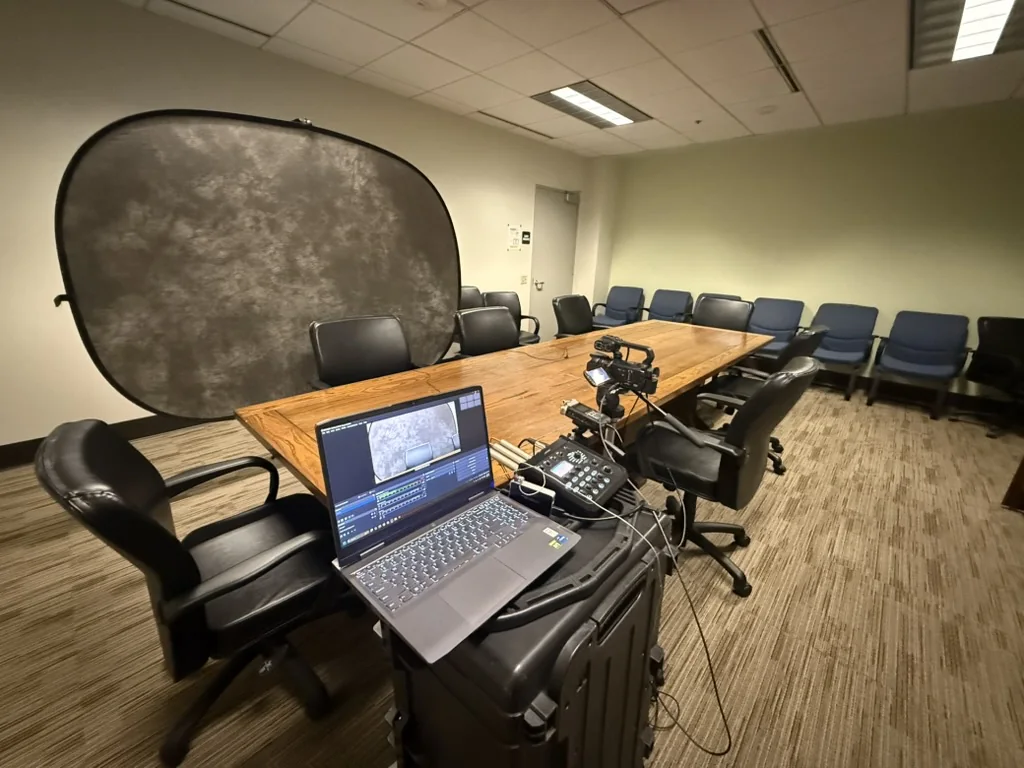
Camera, sound, backdrop, and recording software: a practical working discipline that later carried into live-stream production.